
The Pete Report
Wayward pelican recovering thanks to people who care

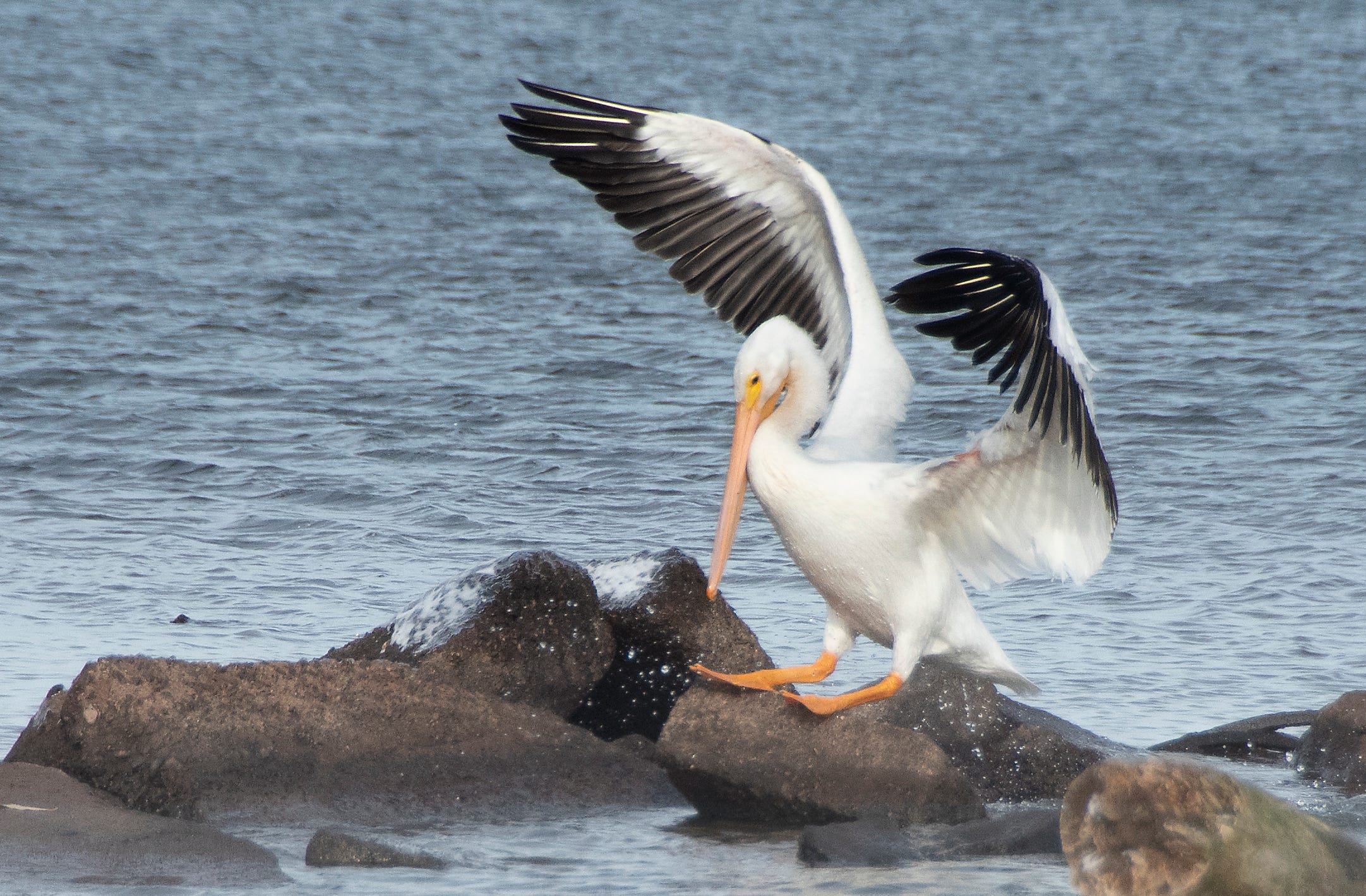
In lieu of my regular Wednesday essay, I will step aside and quote verbatim and in its entirely a recent report from the good people of the Raptor Education Group, Inc. concerning their efforts to come to the aid of Pelican 805-25, otherwise known as “Pete.”
Please support the efforts of this organization to help keep birds safe by donating at their website below:
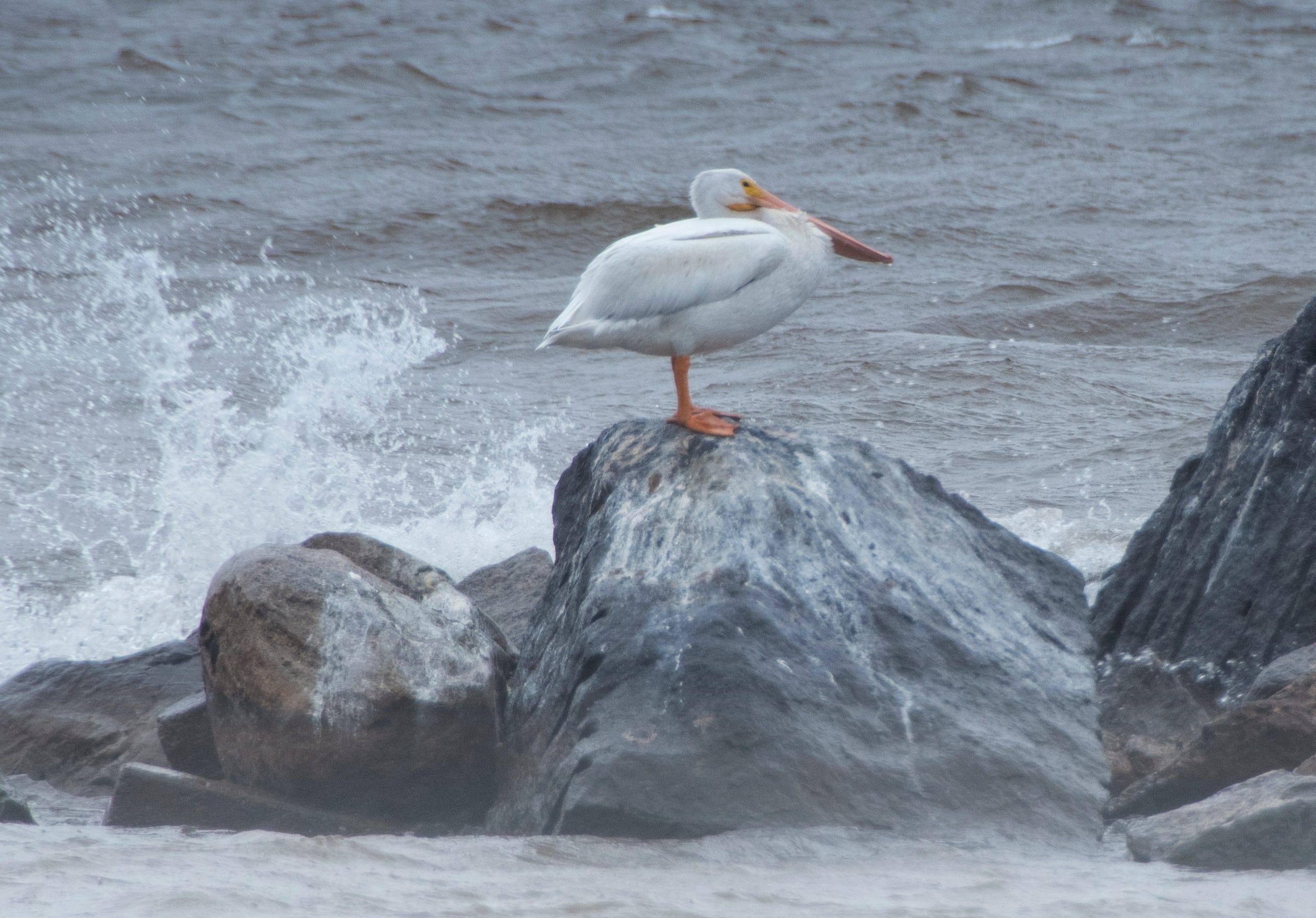
“Famous American White Pelican from Maslowski Beach, Lake Superior Shoreline/Ashland. Admitted to Raptor Education Group Inc.
Recently, a well-known and highly admired American White Pelican was admitted to the REGI clinic. This pelican had spent the past several months charming visitors and residents at Maslowski Beach along Lake Superior in Ashland. A pelican was an unusual sight there for several reasons, not least of which was that it was far from its usual migratory route, as it was heading toward a breeding ground in Canada along the Mississippi River flyway.
The bird was easily noticeable for several reasons, not least of which is that American White Pelicans are massive birds with a 9–10-foot wingspan and weigh around 15-20 lbs. These facts make them larger than bald eagles and give them a wider wingspan than California Condors! They are the largest flying birds in the U.S.! Another reason this pelican stood out in Ashland, WI, was its pure white plumage, which sharply contrasted with the backdrop of Lake Superior and the rocky shoreline. It didn’t help its anonymity when this individual frequently visited the popular beach area, just like human visitors to Ashland do.
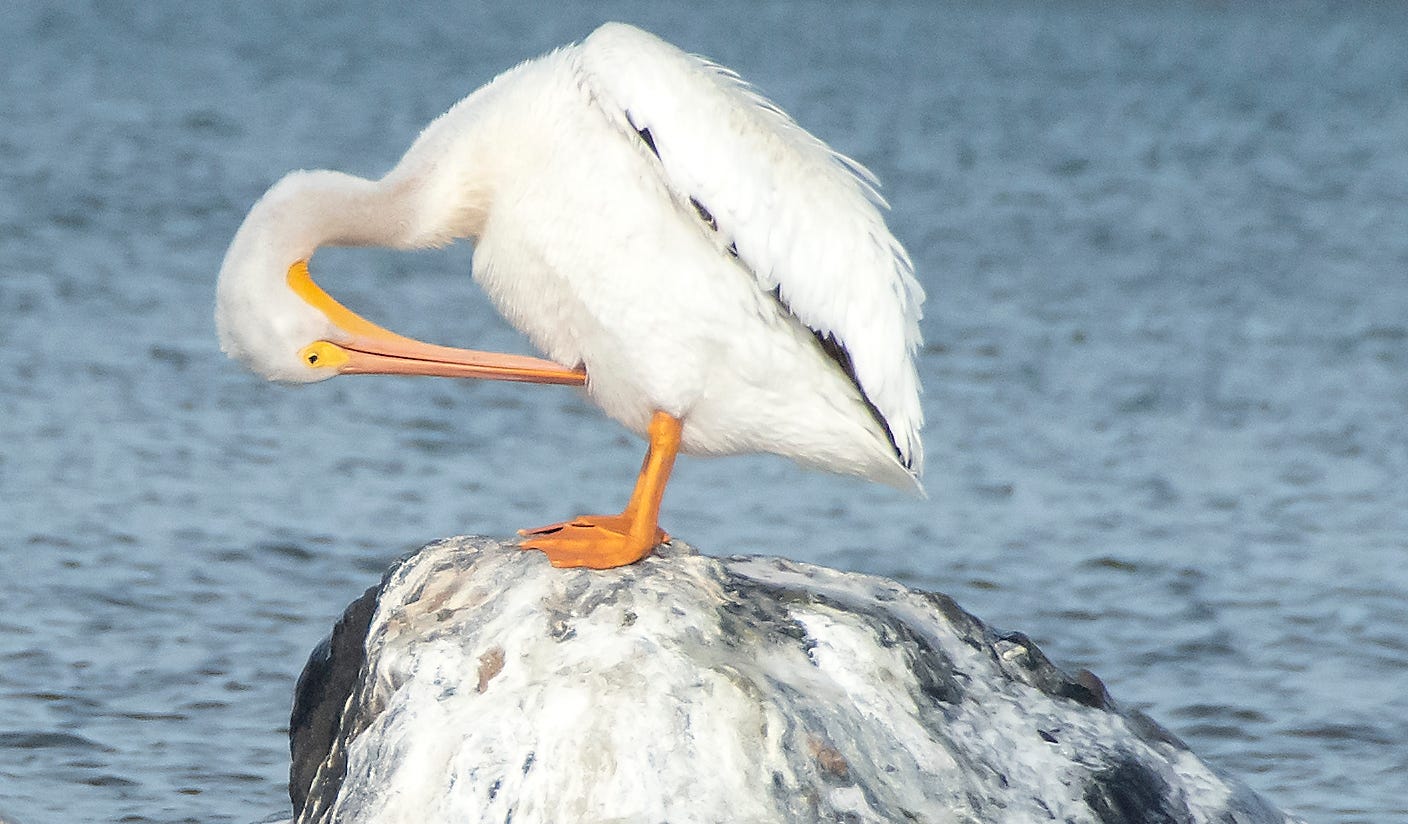
Of course, the question remained: why was this pelican, naturally a flock bird, alone for months in a foreign area yet visibly healthy? It was closely monitored and, after the weather turned cold last week, captured by DNR Conservation Biologist Ryan Brady. The confused pelican arrived at the REGI clinic on the night of December 3rd. An examination, radiographs, and blood work after admission revealed a secret that only the pelican knew until it was captured and brought into captivity. We found this poor pelican had been shot illegally; its head, neck, beak, pouch, and body bore evidence of gunfire. Its enormous beak had been shot through several times, which would have hampered its ability to fish and eat. Its feather condition on the neck and areas of new molt were poor.
Pelican 805-25 has made good progress since its rescue, starting to eat on its own two days after admission and now consuming fish, which is encouraging. It remains anemic and underweight, but we are hopeful these issues will improve with our care. Frostbite on the feet is a concern in cold weather, and recovery may take time. Keep sending positive energy to our dear patient for a full recovery. He will stay with us until he can be released in late spring, when migration begins again.
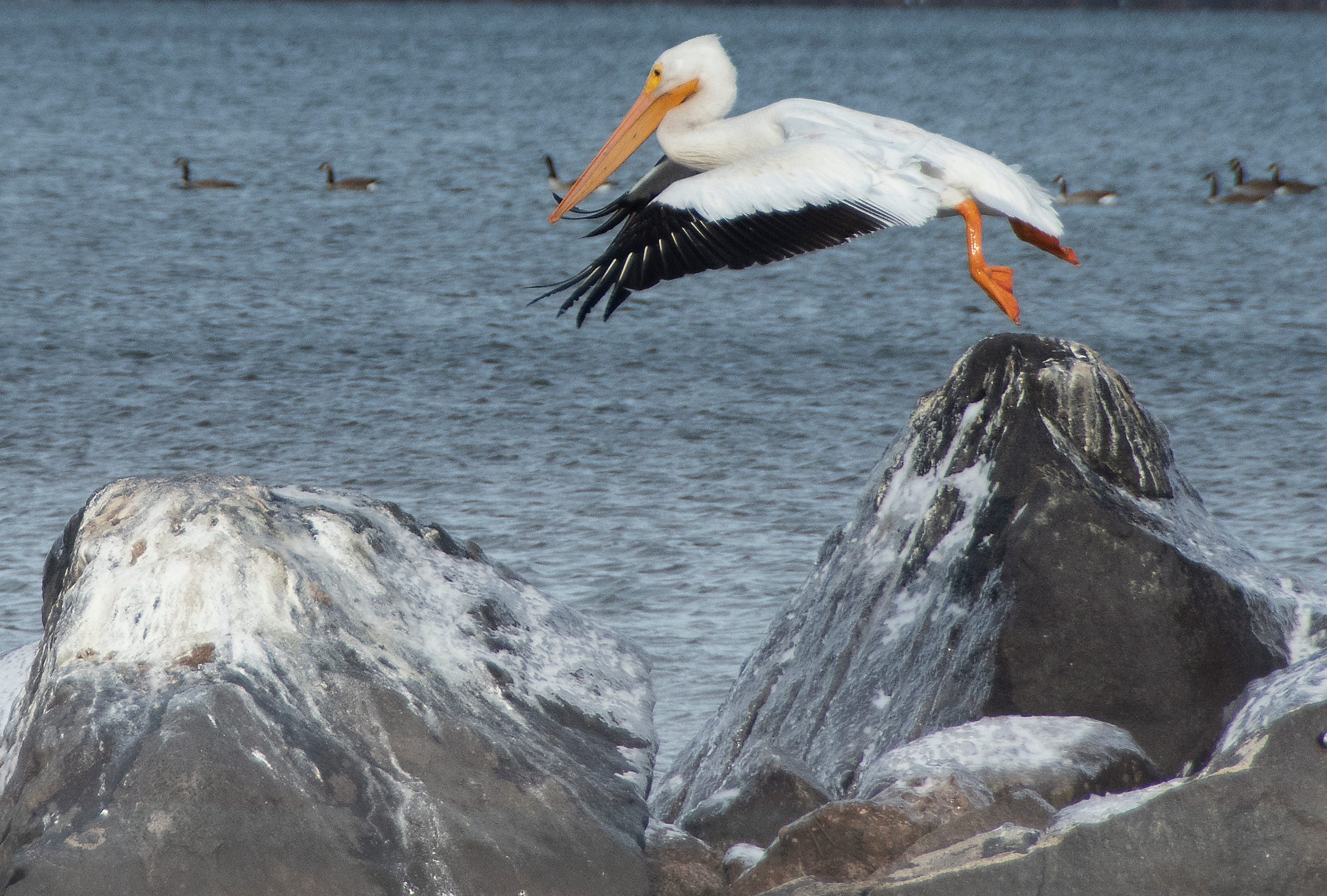
The good news/bad news is that he is not alone and is not the only pelican patient at Raptor Education Group Inc. as he recovers. This year, we have admitted five white pelicans that were shot, have lead poisoning, and one with rat poisoning after he clearly ate a rat that had consumed rodenticide.
Illegal shooting remains a serious issue for protected migratory birds, including Bald Eagles, Peregrine Falcons, Loons, Red-tailed Hawks, owls, American White Pelicans, and Trumpeter Swans—and that’s just a short list. Our work at REGI began to help prevent accidental injuries to our native wildlife. Yet, we find ourselves using our resources to pay for the recklessness of others who think it’s amusing to shoot innocent creatures. Your awareness and action can help reduce this threat and protect these species for future generations.
Our DNR Wardens need help catching those who shoot to maim and leave birds to suffer because reporting these acts directly supports conservation efforts and protects wildlife for everyone to enjoy. These individuals are NOT HUNTERS because these birds are not game species and are protected by federal law. Remember, wildlife is for everyone to enjoy, and those who shoot illegally are taking that away. It’s your duty to report them or let them know you disapprove of their illegal actions.
Anyone with information on this should call the DNR tip line. How to Report a Violation:
Please call 1-800-847-9367 for immediate response (7 am - 10 pm daily).
Online: Visit the Wisconsin DNR Report a Violation page to fill out a detailed form for non-emergency situations.”

And so ends the saga of Pete the Pelican, or at least until next spring when he will, hopefully, be well enough to once again join the migration. In the end, this has been a tale of people as much as birds - those evil or stupid and uncaring enough to shoot at protected migratory birds and those who care enough about other living things to reach out and try to protect them.
I know which ones I want in my flock, and it is those caring people I am thankful for today.
— Jeff Rennicke (all photographs by the author unless otherwise noted).
While I’d love to have you subscribe to the Little Dipper blog, today I’d rather have you make a donation to the work of the Raptor Education Group, Inc.
Powerful story. The fact that Pete stayed visible at Maslowski Beach for months despite being shot probably saved him. Most injured migratory birds go unnoticed til it's too late. What strikes me is how the isolation from his flock turned into an advantage here, making the rescue possible before winter set in completly.
thanks for the update. Sadly-- another story of gun violence.